

How to Control Quality When Importing Wheat Straw Products from China

If you’re importing wheat straw products from China for the first time, one concern always comes up:
How do I make sure the quality is stable?

I’ve worked with many overseas buyers — wholesalers, Amazon sellers, eco brands — and almost all of them worry about the same things:

  • Will the color be consistent?

  • Is the material really food-grade?

  • Will the logo peel off?

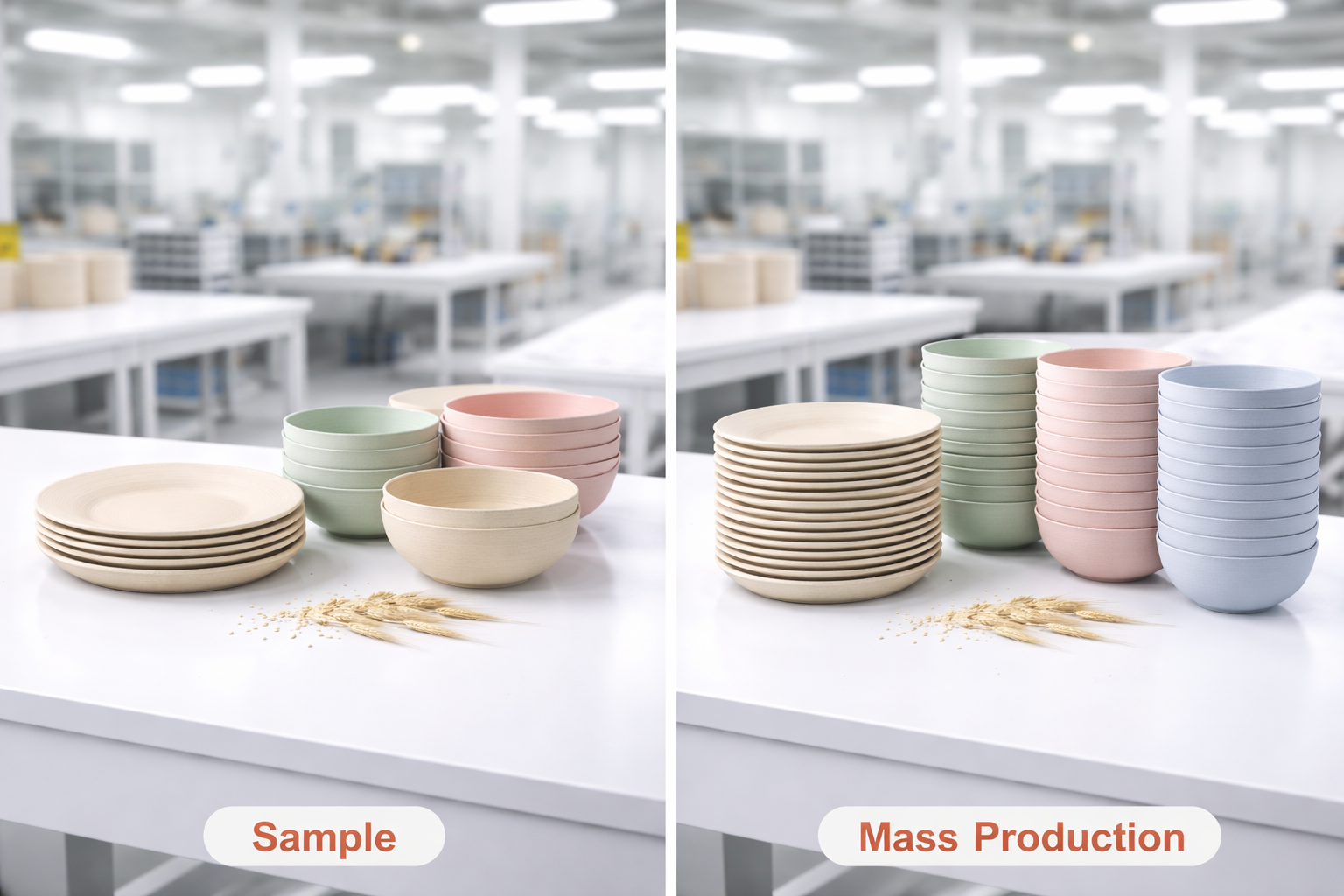
  • What if the bulk order is different from the sample?

The good news?
Quality control is absolutely manageable — if you set it up correctly from the beginning.

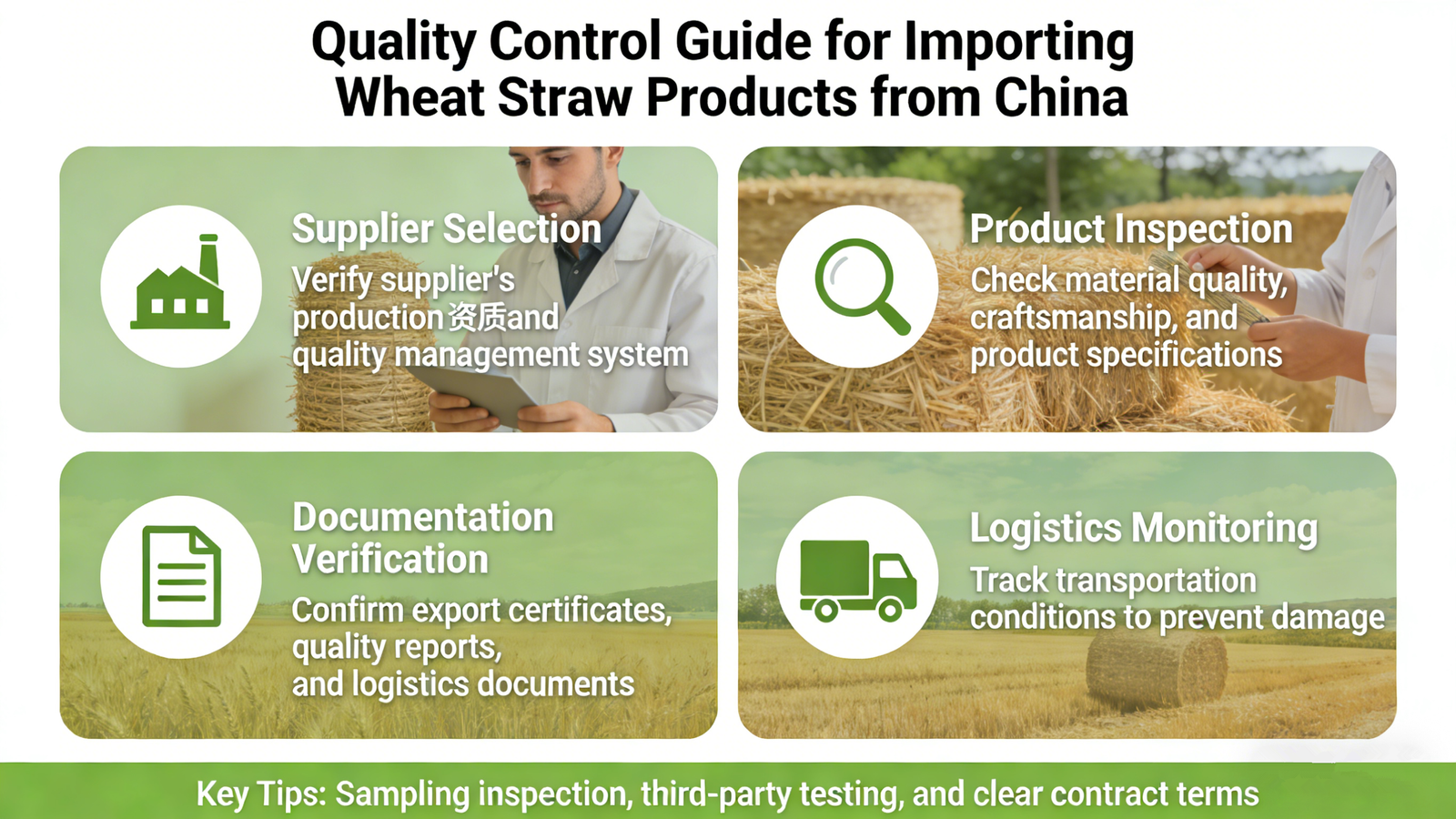
Let me walk you through how experienced importers control quality step by step.

1. Start With a Clear Product Specification Sheet

Most quality problems don’t come from factories.
They come from unclear communication.

Before production starts, make sure you confirm:

  • Material composition (PP + wheat straw fiber ratio)

  • Product size & thickness

  • Weight tolerance

  • Pantone color code

  • Logo position & method

  • Packaging details

If something is not written down, it does not exist.

Professional buyers always request a product specification sheet (PSI) before mass production. This avoids misunderstandings later.


2. Always Confirm a Pre-Production Sample

Never skip the sample stage.

Even if you’ve ordered similar products before, request a pre-production sample that matches:

  • Exact color

  • Final logo method

  • Final packaging

Touch it.
Wash it.
Drop it.
Put it in the microwave (if applicable).

Bulk production should only begin after you confirm the sample in writing.

3. Understand the Raw Material Reality

Wheat straw products are eco-friendly — but they are not 100% straw.

They are typically made from:

  • Wheat straw fiber

  • Food-grade polypropylene (PP)

This balance affects:

  • Strength

  • Heat resistance

  • Durability

  • Color stability

If you require specific certifications (FDA, LFGB), ask the supplier to provide test reports before shipment.

And make sure the test report matches the actual production batch.


4. Monitor Color Consistency Carefully

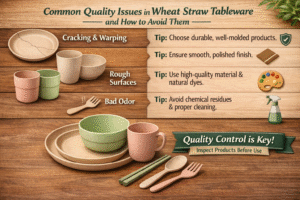
Color inconsistency is one of the most common issues.

Because wheat straw material has natural fibers, slight variations may occur. To reduce risk:

  • Confirm Pantone code clearly

  • Ask for color tolerance range

  • Avoid very light pastel colors if consistency is critical

  • Approve production photos before shipment

Small differences are normal. Large differences are not.


5. Check Logo Quality & Durability

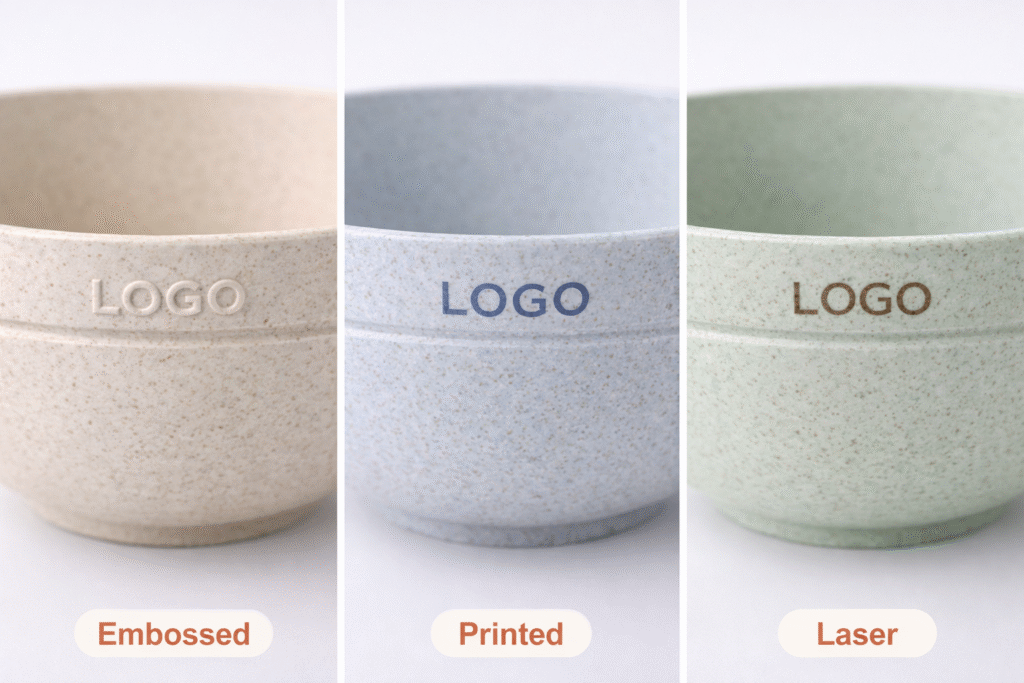
Different logo methods have different risks:

  • Silk printing → may fade over time

  • Heat transfer → may peel if poorly applied

  • Embossed logo → more stable for long-term use

If you are building a brand, I always suggest embossed or debossed logo.
Less risk. More premium feel.

Wheat straw logo methods quality comparison

6. Do a Pre-Shipment Inspection

Before the goods leave China, arrange:

  • Factory self-inspection report
    OR

  • Third-party inspection (SGS / Intertek / local inspection agency)

Inspection usually covers:

  • Quantity

  • Appearance defects

  • Logo placement

  • Color consistency

  • Drop test

  • Carton strength

If your order value is high, inspection cost is always worth it.


7. Build a Long-Term Supplier Relationship

Here’s something many new importers don’t realize:

The best quality control is long-term cooperation.

When a factory knows:

  • You will reorder

  • You have stable volume

  • You care about details

They treat your production more carefully.

Short-term price hunting often leads to unstable quality.

Reliable suppliers value stable partners.


8. Don’t Only Focus on Price

Lower price usually means one of these:

  • Thinner material

  • Lower-grade PP

  • No inspection

  • Weak packaging

When importing eco-friendly tableware, quality is your brand reputation.

Saving $0.05 per unit is meaningless if customers complain later.


Final Thoughts

Importing wheat straw products from China doesn’t have to be stressful.

With:

  • Clear specifications

  • Sample confirmation

  • Proper inspection

  • Reliable supplier partnership

You can control quality confidently and build a stable supply chain.

Most quality issues are preventable.
The key is preparation, not reaction.

Leave a Reply

Your email address will not be published. Required fields are marked *

OR LEAVE US A MASSAGE

We will contact you as soon as we see the information

YOU CAN CONTACT US

+8618559050813          sales@naikegroup.com