
FDA vs LFGB Certification for Tableware: What Buyers Need to Know
Understanding FDA vs LFGB certification for tableware is essential for global buyers.When sourcing tableware for international markets, one of the most important questions buyers ask is:
👉 What is the difference between FDA and LFGB certification?
Many importers compare FDA vs LFGB certification for tableware before choosing suppliers.Understanding these two standards is essential for importers, wholesalers, and brands to ensure product safety, compliance, and smooth customs clearance.
In summary, FDA vs LFGB certification for tableware depends on your target market.We’ll explain the key differences between FDA and LFGB certifications, and how to choose the right one for your market.
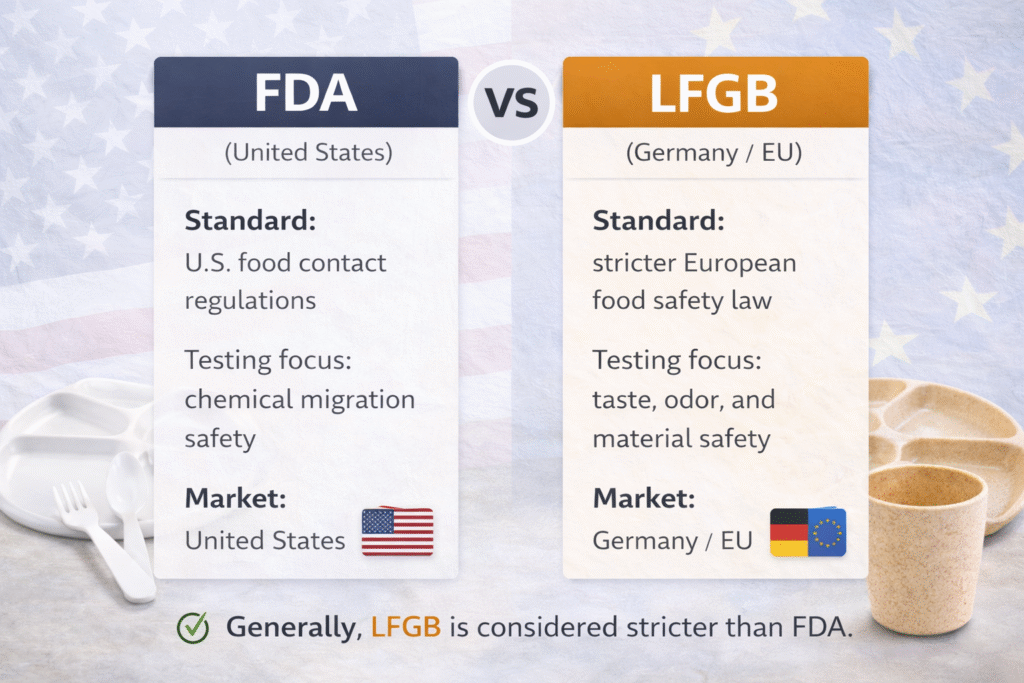
FDA vs LFGB: Quick Comparison (Featured Snippet)
👉 FDA (USA)
- Standard: U.S. food contact regulations
- Testing focus: chemical migration safety
- Market: United States
👉 LFGB (Germany / EU)
- Standard: stricter European food safety law
- Testing focus: taste, odor, and material safety
- Market: Germany and EU
📌 Generally, LFGB is considered stricter than FDA.
What Is FDA Certification for Tableware?
FDA refers to the regulations set by the U.S. Food and Drug Administration for food-contact materials.
Key Points:
- Ensures materials are safe for food contact
- Limits harmful chemical migration
- Widely required for products entering the U.S. market
👉 FDA compliance is essential if you plan to sell on platforms like Amazon US or supply American retailers.
What Is LFGB Certification for Tableware?
LFGB stands for the German Food and Feed Code.
Key Features:
- One of the strictest food safety standards in Europe
- Includes odor and taste testing
- Requires higher material purity
👉 Products with LFGB certification are often considered premium quality in the market.
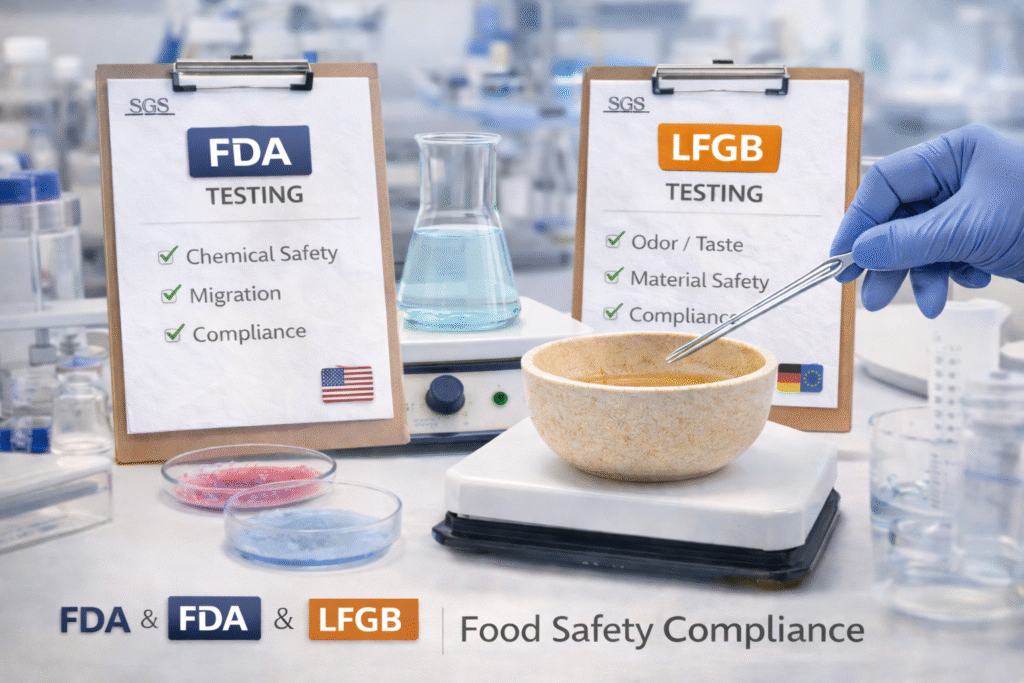
FDA vs LFGB Certification for Tableware: Key Differences
1. Testing Standards
- FDA → Focus on chemical safety
- LFGB → Includes chemical + sensory testing
2. Strictness Level
- FDA → Standard safety requirement
- LFGB → More strict and comprehensive
3. Market Application
- FDA → United States
- LFGB → Germany and European Union
4. Cost of Certification
- FDA → Lower testing cost
- LFGB → Higher due to stricter requirements
Which Is Better: FDA or LFGB Certification for Tableware?
For U.S. Market
👉 Choose FDA certification
- Required by import regulations
- Accepted by major retailers
For European Market
👉 Choose LFGB certification
- Required for EU compliance
- Builds higher trust with buyers
For Global Brands
👉 Best strategy:
- Use both FDA + LFGB
- Expand market reach
- Increase product credibility
How to Choose FDA or LFGB Certification for Your Market
Certification is not just a requirement—it is a trust signal.
Benefits:
- Ensures product safety
- Reduces legal risk
- Improves brand reputation
- Helps pass customs inspections
👉 Buyers prefer certified suppliers for long-term cooperation.
Common Mistakes Buyers Should Avoid
❌ Assuming all tableware is automatically compliant
❌ Not verifying test reports
❌ Using outdated certificates
❌ Choosing suppliers without documentation
👉 Always request valid test reports from certified labs.
Internal Linking Strategy
- Explore our FDA & LFGB certified wheat straw dinnerware
- Learn more about our quality control process
- Check our OEM customization services
🚀 CTA Section
Looking for certified wheat straw tableware supplier?
We provide:
- FDA & LFGB certified products
- Full test reports available
- OEM & ODM customization
- Strict quality control
👉 Contact us now for certificates and samples.
Key Differences Between FDA and LFGB:
– Testing standards
– Safety requirements
– Market application
– Certification cost
FAQ – FDA vs LFGB
1. Is LFGB better than FDA?
Yes, LFGB is generally stricter than FDA.
2. Do I need both certifications?
If you sell globally, yes.
3. Is FDA certification mandatory?
Yes, for U.S. food-contact products.
4. Does LFGB apply to all EU countries?
Yes, widely recognized in Europe.
5. How to verify certification?
Check official test reports from accredited labs.
Discuss Your Project
Tell us about your project.

How to Separate Clean and Used Pieces in an Outdoor Set
A practical buyer workflow for separating clean and used outdoor dinnerware from outbound packing through washing, drying and repacking.
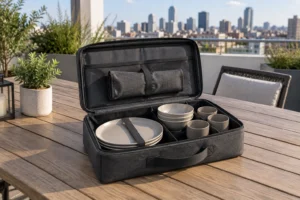
Choose a Carry-Case Opening That Works at the Table
A buyer review sheet for choosing a carry-case opening that keeps camping dinnerware accessible without wasting table space.
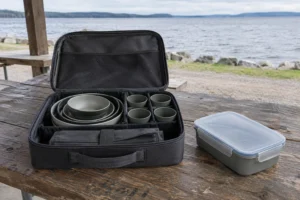
Should the Lunch Box Share the Dinnerware Case?
A buyer matrix for deciding whether a food container should ride inside a camping dinnerware case or remain a separate module.
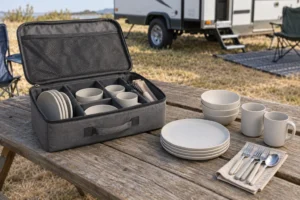
Write a Repeatable Pack-Out Instruction for a Portable Set
A practical numbered pack-out sequence and sign-off worksheet for portable dinnerware sets, with scope, exception and revision controls.
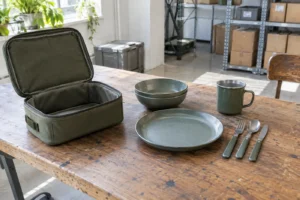
How to Check Fit Between Existing Dinnerware and a New Carry Case
A practical component-to-case drawing checklist for buyers changing the carry case around existing camping plates, bowls, cups and utensils.

How to Build a Core Set Without Bundling Unused Pieces
A buyer-ready base-versus-option worksheet for configuring a camping dinnerware core set without forcing every customer to pay for unused components.
2 Responses