Common Quality Issues in Wheat Straw Tableware and How to Avoid Them

As more brands and importers look for eco-friendly alternatives to plastic, wheat straw tableware has become a popular choice. Lightweight, reusable, biodegradable-looking, and cost-effective — it checks many boxes for modern markets.
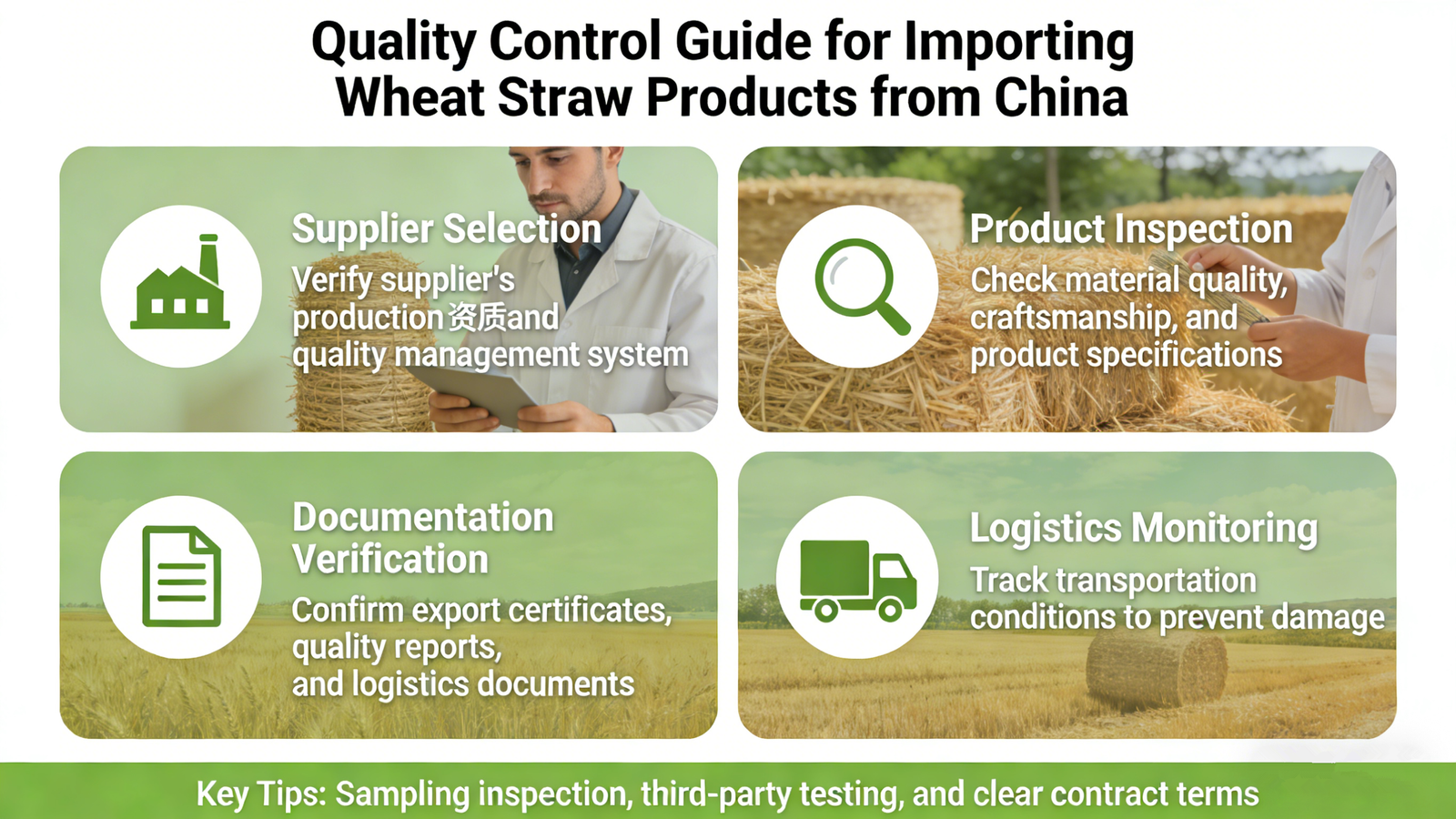
But if you’ve ever sourced wheat straw plates, bowls, or cutlery from overseas, you probably know: not all products are created equal.

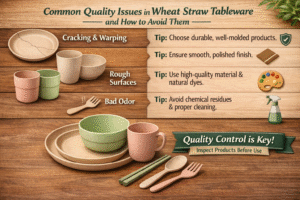
In this article, we’ll walk through the most common quality issues in wheat straw tableware and, more importantly, how to avoid them. This is written from real factory and export experience — the kind of details buyers usually only learn after a few painful shipments.


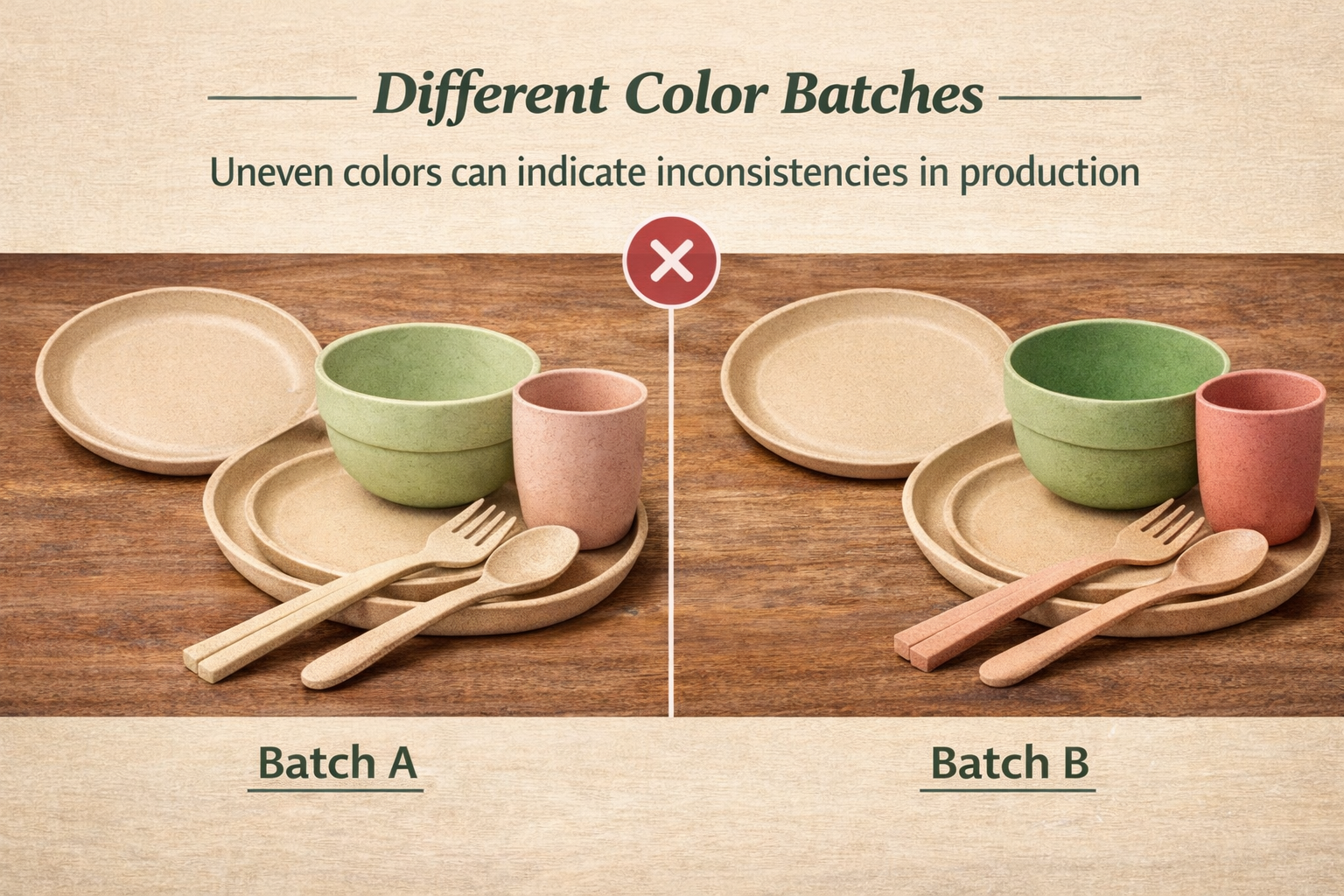
1️⃣ Color Inconsistency Between Batches

The Problem

You approve a beautiful natural beige sample.
Mass production arrives… and the color looks darker, uneven, or slightly grey.

This is one of the most common complaints in wheat straw products.

Why It Happens

  • Wheat straw powder is a natural material — its tone varies by season and source.

  • Different mixing ratios of PP (polypropylene) and straw fiber affect the final shade.

  • Temperature fluctuations during injection molding can slightly change color.

  • Lack of strict color control during mass production.

How to Avoid It

  • Always confirm Pantone reference or define “natural color tolerance” clearly.

  • Request a pre-production sample (PPS) from bulk raw materials.

  • Ask your supplier if they control raw material batches consistently.

  • Include acceptable color range in your contract.

2️⃣ Surface Defects (Black Spots, Burrs, Rough Edges)

The Problem

Visible black dots, fiber clusters, sharp edges, or rough finishes on the surface.

For retail brands, this can seriously damage brand perception.

Why It Happens

  • Impurities in straw powder.

  • Poor filtering of raw materials.

  • Worn-out molds.

  • Inadequate trimming and polishing after molding.

How to Avoid It

  • Confirm whether raw materials are filtered and sieved before production.

  • Ask about mold maintenance frequency.

  • Request close-up inspection photos before shipment.

  • Conduct AQL inspection before container loading.


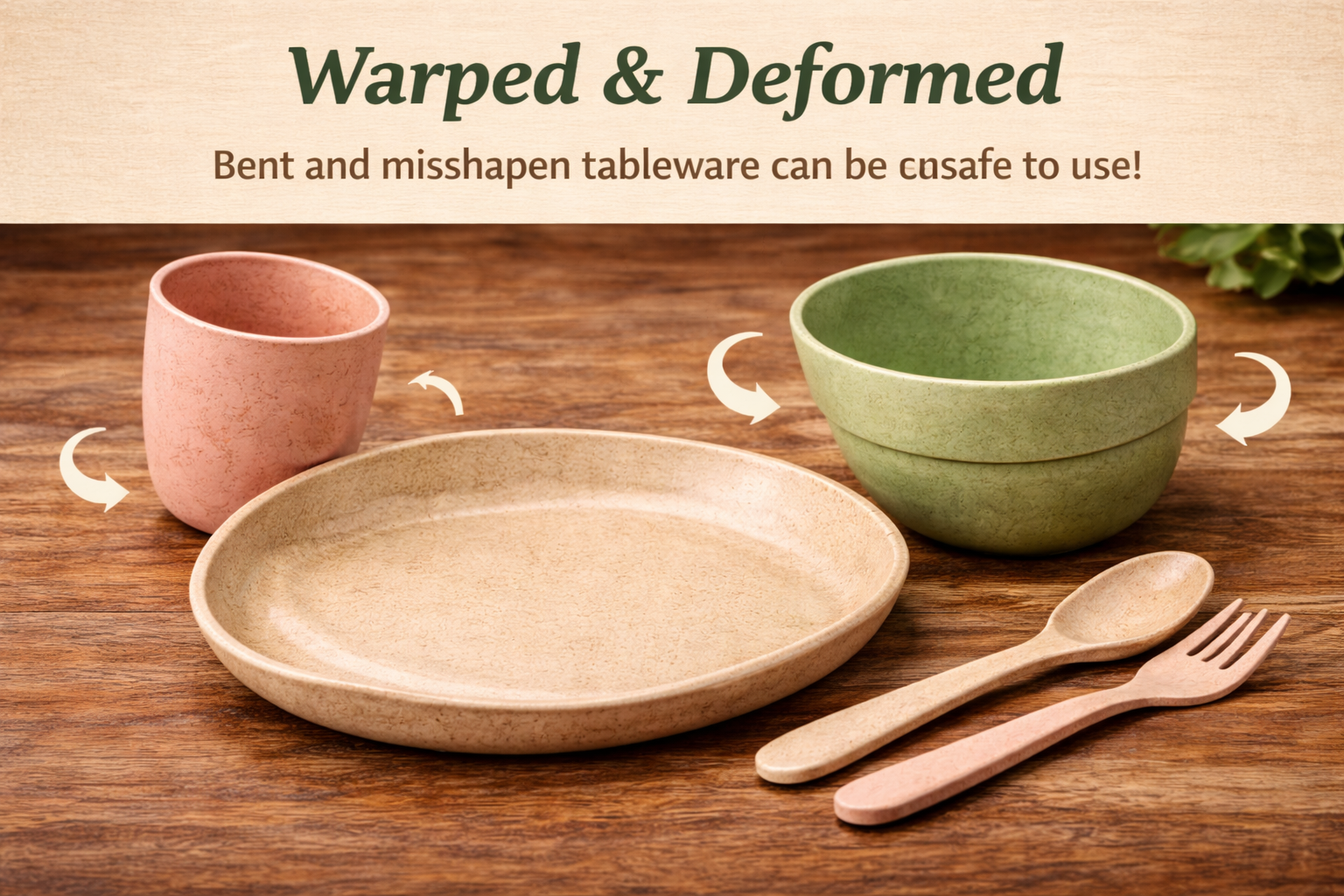
3️⃣ Warping or Deformation

The Problem

Plates bend slightly. Bowls don’t sit flat. Lids don’t close properly.

This often becomes obvious after long-distance shipping.

Why It Happens

  • Incorrect PP-to-straw ratio.

  • Uneven cooling during molding.

  • Overpacking during shipment.

  • Exposure to high container temperatures.

How to Avoid It

  • Confirm material ratio (common: 30% wheat straw + 70% PP).

  • Ask supplier about cooling time standards.

  • Avoid over-stacking during packaging.

  • Use inner cartons or dividers for thin plates.

4️⃣ Weak Structure or Easy Cracking

The Problem

Products feel too soft or crack under pressure.

This usually happens when suppliers increase straw content too much to reduce cost or promote “eco percentage.”

Why It Happens

  • Excessive fiber ratio.

  • Low-grade PP material.

  • Poor injection pressure control.

How to Avoid It

  • Don’t only focus on “high wheat straw percentage.”

  • Ask for impact resistance testing results.

  • Perform simple pressure tests on samples.

  • Choose experienced manufacturers instead of traders.

📌 Balance between eco-content and durability is key.


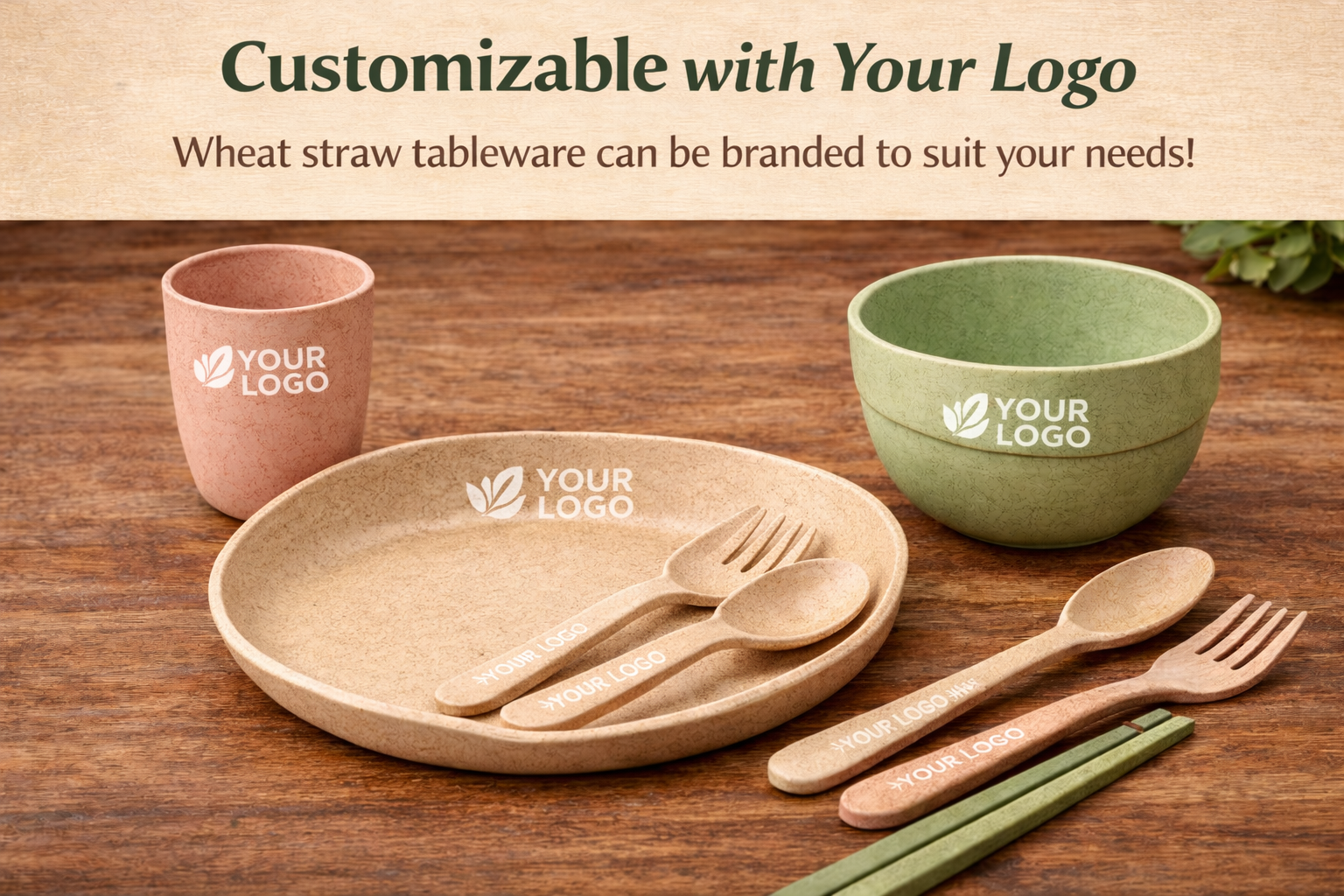
5️⃣ Logo Printing Problems

The Problem

  • Logo fades after washing.

  • Misalignment.

  • Ink peeling.

  • Laser engraving too shallow.

For promotional or custom branding orders, this is a serious issue.

Why It Happens

  • Low-quality ink.

  • No adhesion testing.

  • Inconsistent printing position control.

  • Incorrect temperature during logo processing.

How to Avoid It

  • Confirm printing method: silk print, pad print, laser engraving, embossed.

  • Request logo durability test (dishwasher simulation if needed).

  • Approve digital mockup before production.

  • Ask for a final production sample with logo.


6️⃣ Odor Issues

The Problem

Some batches have a noticeable plastic or burnt smell.

End consumers are very sensitive to this.

Why It Happens

  • Overheating during production.

  • Low-quality recycled PP.

  • Poor raw material storage.

How to Avoid It

  • Ask if supplier uses virgin PP or recycled material.

  • Request food-grade certification.

  • Smell-test production samples before shipment.

  • Ensure factory has proper ventilation and drying systems.


7️⃣ Certification & Compliance Risks

For markets like Europe, Australia, or the US, compliance is non-negotiable.

Relevant standards may include:

  • FDA (USA food contact)

  • European Commission food contact regulations

  • LFGB (Germany)

How to Avoid Problems

  • Always request updated test reports.

  • Make sure test report matches actual product model.

  • Confirm lab name and validity period.

  • Avoid “shared reports” from unrelated factories.

Leave a Reply

Your email address will not be published. Required fields are marked *

OR LEAVE US A MASSAGE

We will contact you as soon as we see the information

YOU CAN CONTACT US

+8618559050813          sales@naikegroup.com