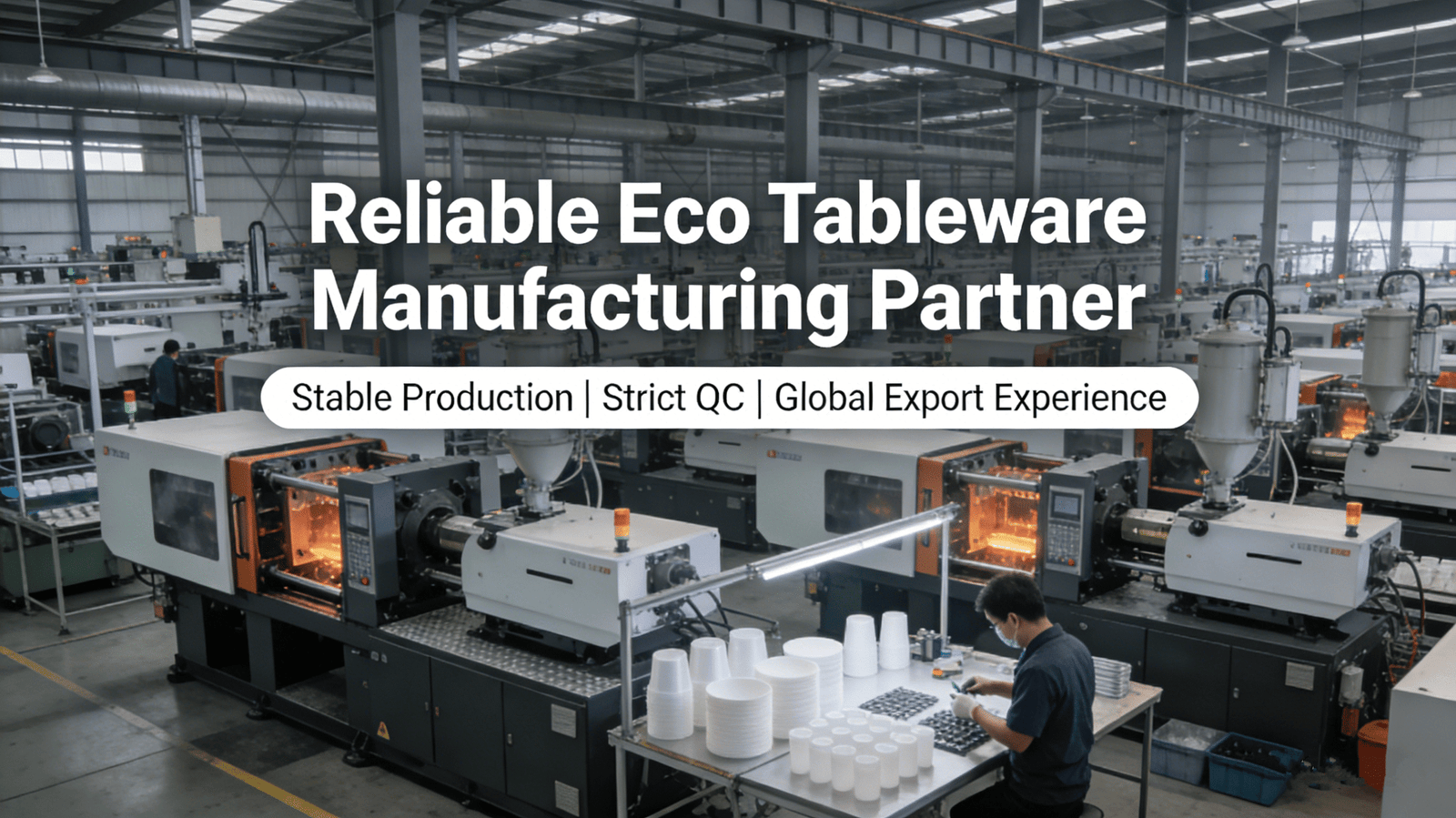
How to Choose a Reliable Wheat Straw Dinnerware Set Supplier
As global demand for sustainable products continues to grow, wheat straw dinnerware sets are becoming a popular choice for retailers, distributors, and eco-conscious brands. However, choosing the right supplier is critical to ensuring product quality, compliance, and long-term business stability.
In this guide, we explain how to evaluate wheat straw dinnerware suppliers professionally and avoid common sourcing risks.
Why Choosing the Right Supplier Matters
A reliable supplier does more than just provide products. They directly impact:
• Product safety compliance
• Delivery stability
• Brand reputation
• Long-term cost control
• Customization capability
Choosing the wrong supplier may lead to delayed shipments, compliance issues, or inconsistent product quality.
Verify Raw Material Composition
Not all wheat straw dinnerware products are made the same. Some contain high wheat fiber content, while others rely heavily on plastic binders.
Ask suppliers to clearly provide:
• Material ratio
• Food-grade certification
• Chemical safety declaration
When evaluating claims, always check:
🔴 <span style=”color:red”>food grade material certification standards</span>
🔴 <span style=”color:red”>BPA free material safety requirements</span>
This helps ensure products are safe for food contact markets.
Check Factory Certifications and Testing Capability
Professional manufacturers should provide valid compliance documentation for export markets.
Key certifications may include:
• FDA (USA food contact safety)
• LFGB (EU food safety testing)
• ISO quality management system
Ask suppliers to show real test reports, not just certificate templates.
Important verification references:
🔴 <span style=”color:red”>FDA food contact material requirements</span>
🔴 <span style=”color:red”>LFGB food safety testing standards</span>
Evaluate Customization Capability
For private label brands and distributors, customization capability is a key competitive factor.
A reliable supplier should support:
• Custom logo printing
• Custom color matching
• Packaging customization
• Mold development (if needed)
You can check supplier experience through:
🔴 <span style=”color:red”>OEM eco tableware manufacturing process</span>
🔴 <span style=”color:red”>private label tableware production workflow</span>
Assess Production Capacity and Lead Time Stability
Ask these key questions:
• Monthly production capacity
• Peak season delivery plan
• Backup production solutions
• Raw material supply stability
Factories with stable raw material sourcing usually have more reliable delivery schedules.
Understand MOQ and Cost Structure
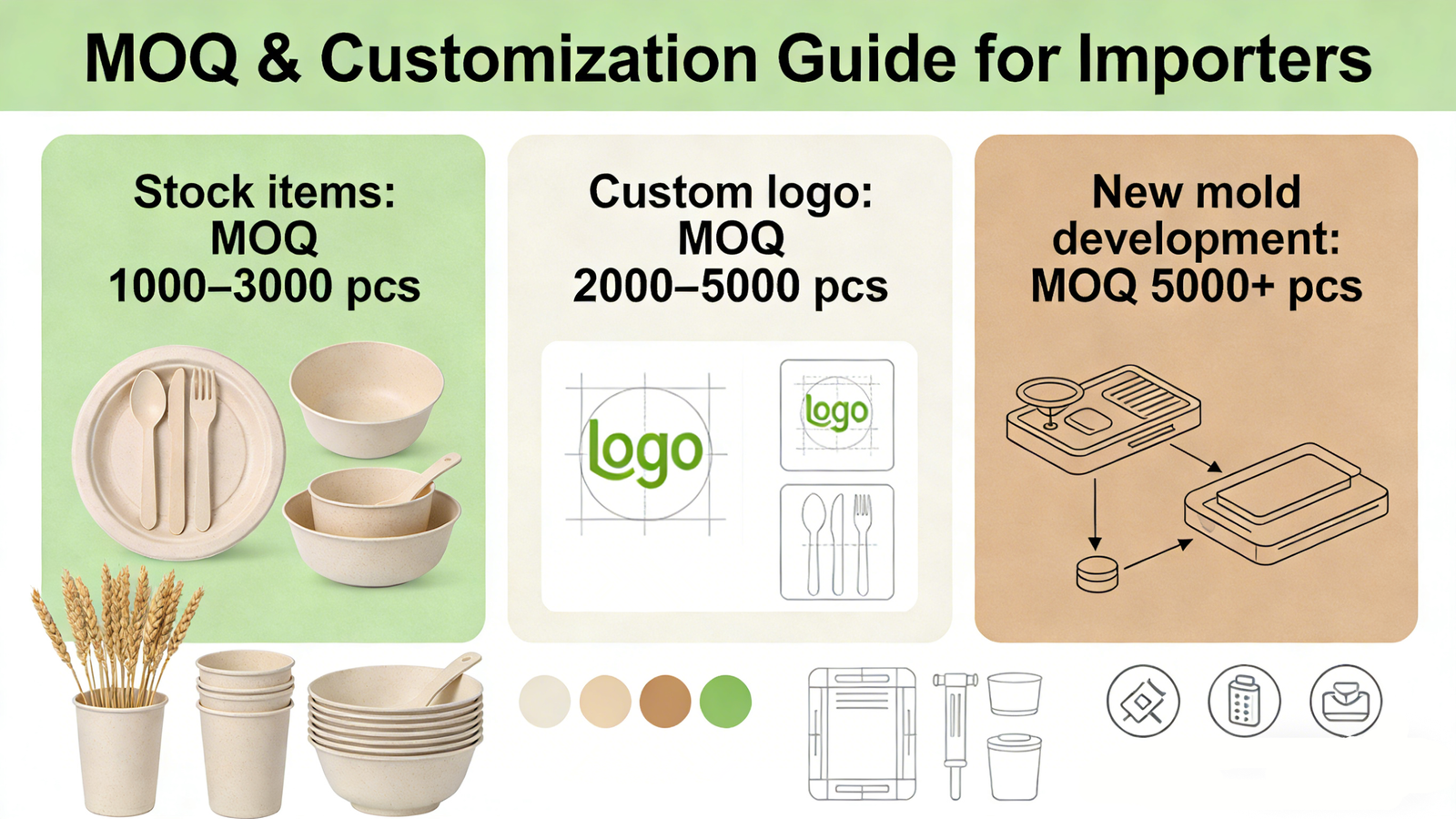
Typical MOQ ranges:
• Stock items → 1000–3000 pcs
• Custom logo only → 2000–5000 pcs
• New mold development → 5000+ pcs
When negotiating MOQ, you can research:
🔴 <span style=”color:red”>wholesale eco tableware MOQ negotiation strategies</span>
Review Export Experience and Target Market History
Suppliers with experience exporting to developed markets usually understand compliance and packaging requirements better.
Ask about:
• Main export regions
• Retail client experience
• Compliance handling history
Useful research reference:
🔴 <span style=”color:red”>eco tableware import requirements by country</span>
Request Samples Before Bulk Orders
Always request production-level samples, not showroom samples.
Check samples for:
• Surface finishing quality
• Color consistency
• Odor check
• Heat resistance performance
Sample evaluation reference:
🔴 <span style=”color:red”>tableware product quality inspection checklist</span>
Common Mistakes Buyers Should Avoid
❌ Choosing based only on price
❌ Ignoring certification verification
❌ Skipping sample testing
❌ Not checking factory production scale
Final Checklist — Reliable Supplier Quick Evaluation
Before confirming cooperation, verify:
✔ Material composition transparency
✔ Valid certification reports
✔ Stable production capacity
✔ Customization support
✔ Export experience
✔ Sample quality approval
Conclusion
Choosing a reliable wheat straw dinnerware set supplier requires balancing price, quality, certification, and production stability. Long-term cooperation with a professional manufacturer can significantly reduce supply chain risk and improve product competitiveness.
External Research Resources
You can further research supplier evaluation standards through:
👉 🔴 <span style=”color:red”>global food contact material compliance guide</span>
👉 🔴 <span style=”color:red”>eco product supplier verification standards</span>
👉 🔴 <span style=”color:red”>sustainable tableware certification systems overview</span>